

A temple is rarely just “a building for worship.”
It tends to act like a mirror of the place it’s located in – the settlement’s economy, fears, politics, and even its geography all shape how the god is expressed locally.
In return, the temple reinforces those same traits back into the settlement.
You can think of it as a feedback loop: the land shapes the god’s local face, and the god’s local cult shapes the land’s habits.
Local Adaptation
So instead of thinking of a temple as a fixed expression of a deity, it’s often more accurate to treat it as a local adaptation of that deity.
The god may be consistent in myth, but in lived experience, they are interpreted through the needs and pressures of a specific place.
A god of protection in a capital city, for example, enviably becomes concerned with soldiers, contracts, and legitimacy; the same god in a border fort is focused on gates, watch schedules, and last-stand refuges.
The theology doesn’t change, the emphasis does – what people actually pray for, and what they believe the god reliably answers.
In this sense, every temple is a translation layer between an abstract divine ideal and a very concrete reality.
Priests become interpreters, deciding which aspects of the god matter most here and now.
Traditions
Over time, those interpretations harden into local tradition, then into expectation, and eventually into doctrine that outsiders might even mistake for the “true” version of the faith.
This can be how various sects within a church begin and develop.
Over time, the deity’s “face” in that settlement is no longer just theology – it is physical infrastructure, habit, and expectation.
The people who live there don’t just believe in the god, they live inside systems that assume the god is already present and active in very specific ways.
Below is a list of ways this may show up.
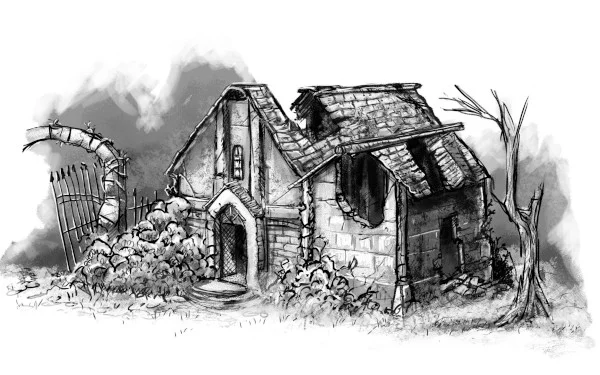
1. The Temple Adapts to Local Need (Not Doctrine Alone)
Even if a deity has a broad portfolio, a specific temple will usually emphasise only what matters most to that settlement.
-
-
- A river trading town might emphasise a god’s aspect of safe passage and contracts
- A border fort might emphasise protection, vigilance, and oath-keeping
- A famine-prone village might lean heavily into fertility and appeasement rites, even if that’s a minor aspect of the deity elsewhere
-
So the same god can feel slightly different from place to place.
A temple of a protection deity like Venren, my god of protection, in a wealthy city might look like a court of arbitration. In a frontier village it might look like a fortified refuge with thick doors and warding charms nailed into every beam.
2. Architecture Reflects the Settlement’s Priorities
The temple is often built using whatever the settlement values most:
-
-
- Trade Cities: Large open halls, market-adjacent shrines, coin-donation boxes, meeting chambers
- Walled Towns: Heavy stone, narrow windows, defensible layouts
- Farming Villages: Timber construction, grain stores attached to sanctified spaces
- Nomadic or Roadside Cults: Portable shrines, wagon-temples, roadside chapels
-
A river city temple might literally be built on stilts over water, because the river is the town’s lifeblood. A mining settlement might carve its temple directly into rock near the deepest shaft.
Related Posts:
3. The Priesthood Mirrors Local Power Structures
Who runs the temple often tells you what kind of society it is.
-
-
- In oligarchic cities, temple leadership may be chosen from merchant families
- In feudal lands, clergy may be tied to noble houses
- In frontier regions, priests may be self-selected survivors, ex-soldiers, or a local hero
- In highly organised states, temple hierarchy may mirror government bureaucracy
-
So “religious authority” can often also be a political layer of the settlement.
4. Local Economy Shapes Ritual Practice
What people produce often becomes what they offer.
-
-
- Fishing towns sacrifice fish, shells, salt, and nets
- Agricultural regions offer grain, fruit, and seasonal festivals tied to harvest cycles
- Mining settlements offer metal, slag, and crafted tools
- Trade hubs offer coin, contracts, and recorded agreements
-
This means ritual life becomes tightly bound to what the settlement produces.
In a port city, you might see blessings of cargo manifests. In a farming village, you might see ritual ploughing of a sacred field that determines planting dates for the whole region.
5. The Temple Solves Local Problems (or Tries to)
Temples are often “problem-solving institutions” disguised as religious ones.
-
-
- Banditry: Temple blesses militias or enforces sanctuary laws
- Disease: Purification rites, quarantines, herb-lore
- Disputes: Arbitration courts under divine witness
- Travel Danger: Wayshrines, road blessings, guided caravans
-
The god Dusrin, the god of travel, might have very different temples depending on terrain:
-
-
- Mountain roads: avalanche wards and rope blessings
- Desert routes: water-scouting rites and caravan contracts
- Forest roads: spirit appeasement and safe-passage markers
-
6. Sacred Geography Anchors the Temple
The physical world often dictates where and how a temple exists.
-
-
- Built on Ancient Ruins: Older beliefs persist beneath new doctrine
- Near Crossroads: Emphasises law, commerce, or fate
- On Borders: Emphasises defence, liminality, oath magic
- Near Water Sources: Purification and life symbolism dominate
-
Sometimes the temple doesn’t just reflect the settlement – it reflects why the settlement exists there at all.
7. Moral Tone of the God Changes Locally
Even strict deities become “coloured” by their environment.
A harsh war god in a prosperous city might become ceremonial, disciplined, and tied to state legitimacy.
The same god in a border warzone might become brutal, pragmatic, and focused on survival and fear.
Locals rarely experience “the god” in abstract terms. They experience the temple’s version of the god.
The Temple Becomes Part of Civic Identity
Over time, the temple stops being separate from the settlement and becomes part of what defines it.
People might say:
-
-
- “We are a safe harbour because Venren watches our gates.”
- “We are a hard people because the mountain shrine teaches endurance.”
- “We are wealthy because the road temples keep trade flowing.”
-
In this way, religion becomes civic self-description.
Related Zines




An Example
Venren – Various Temples Across the Known World
Venren’s core idea is always sanctuary, but what “protection” means changes dramatically depending on where you are.
1. The Gilded Court of Locks (Major Trade City)
In a wealthy river city, Venren’s temple is less a church and more a legal sanctuary court.
-
-
- Built like a civic palace with marble columns and locked bronze doors
- Refuge seekers enter a “ring hall” where they cannot be touched
- Every claim of sanctuary is recorded by scribes and witnessed under oath
- Trials happen inside the temple itself, often within 3–7 days
-
Local interpretation of Venren: Protection equals lawful process and civic order
2. The Gatehouse of Quiet Stone (Border Fort / Frontier Town)
Here Venren is not elegant – he is practically survival.
-
-
- The temple is literally part of the town gate wall
- Refuge means “you get inside before the enemy gets you”
- Sanctuary is enforced by armed wardens stationed full-time
- Trials are delayed until danger passes – sometimes weeks or months
-
Local interpretation of Venren: Protection equals physical survival and controlled violence
3. The Chapel of Broken Spears (Raided Farming Region)
A settlement that has suffered repeated raids adapts Venren into something more mournful.
-
-
- Built from reclaimed timber and shattered weapons
- Sanctuary includes both people and livestock
- Refuge seekers are often traumatized survivors rather than accused criminals
- Priests maintain “names of the lost” carved into wooden beams
-
Local interpretation of Venren: Protection equals memory, refuge, and endurance after loss
Overview
If you’re building a settlement for play, the temple is one of the fastest ways to make it feel real.
Not because it adds decoration, but because it quietly reveals how the place actually works.
So instead of starting with doctrine or holy symbols, try starting with the settlement itself. Ask what it is trying to survive. Ask what it produces, what it fears, and what it cannot afford to let fall apart.
Help This Article Grow
Digital gardens are built on ongoing refinement and shared ideas.
If you have some thoughts on this article that can make it better, drop your thoughts below. Your insights will help turn this article into a fully cultivated resource for the community.