

Change is inevitable.
It is the quiet engine that drives history forward. Kingdoms rise and fall. Forests swallow roads. Children become rulers. Empires fracture.
Your campaign world should be no different.
If nothing changes, nothing matters.
Embrace change and you will become a far stronger GM – because change is what makes player choices feel real.
Everything That Happens Changes Something
Every session leaves fingerprints on the world.
When the characters delve into a dungeon and kill the monster in the first chamber, that room changes. It goes from being dangerous to being empty.
But emptiness never lasts.
Nature abhors a vacuum – and so does a great campaign setting.
What Fills the Void?
When a threat is removed, something replaces it.
-
-
- Another monster moves in
- Rival factions expand their territory
- Scavengers pick over the remains
- Locals begin using the space for their own purposes
- A worse thing, drawn by the scent of blood, investigates
-
The important question is not if something fills the void. It is when.
If the characters retreat for a week, the dungeon reacts for a week.
If they abandon it for a month, the dungeon reorganises.
Time is an active force in your campaign.
Want More World Building Articles?
Retreat Is Also Change
Players often assume that leaving something alone “freezes” it.
It does not.
If the party clears the first level of a ruin and leaves to resupply:
-
-
- Wandering monsters migrate
- Intelligent foes set traps
- Barricades go up
- Scouts are sent to nearby settlements
- Rumours spread
-
The dungeon learns.
When they return, it should not be exactly as they left it.
Not because you are punishing them – but because the world is alive.
Failure Is Powerful Change
Success changes the world.
Failure changes it faster.
If the characters fail to protect a mayor from assassination, the town’s entire political structure shifts overnight.
Questions immediately arise:
-
-
- Who benefits from the mayor’s death?
- Was the assassin local or foreign?
- Does a power vacuum trigger unrest?
- Do rival families move openly now?
- Does martial law get declared?
-
The town the players knew no longer exists.
And that is good.
Because now there are consequences.
Now there is tension.
Now there is opportunity.
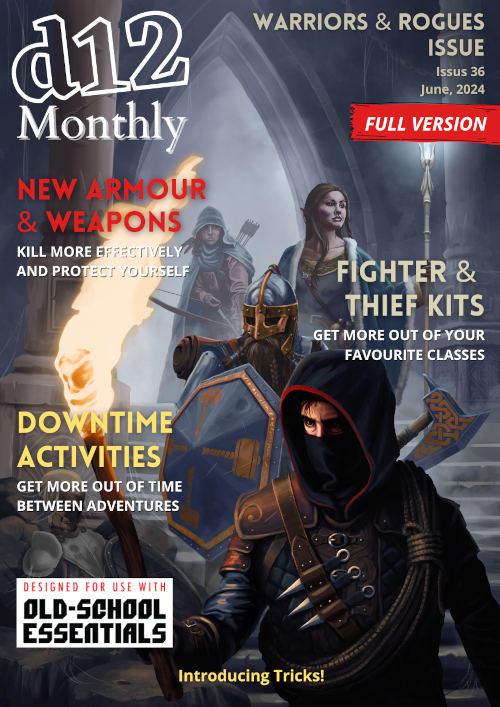
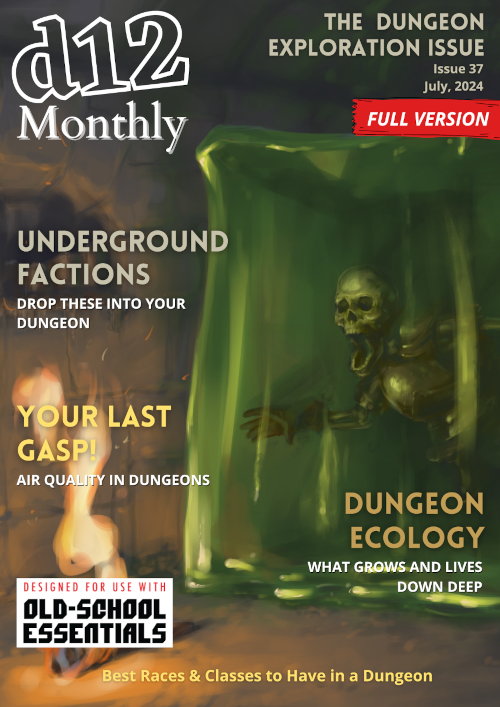
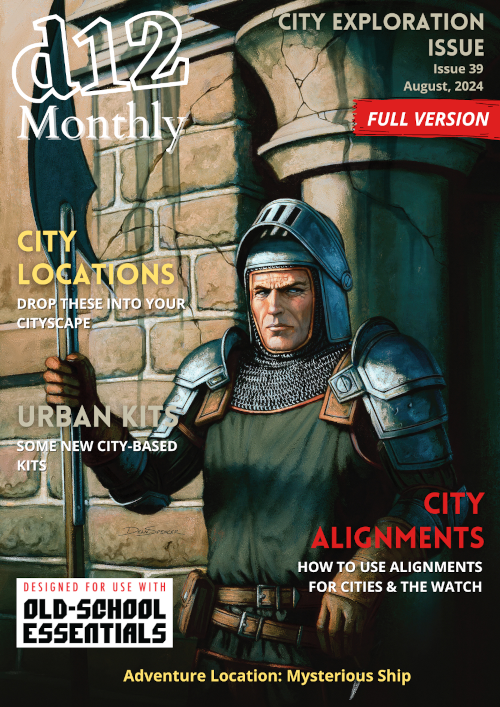
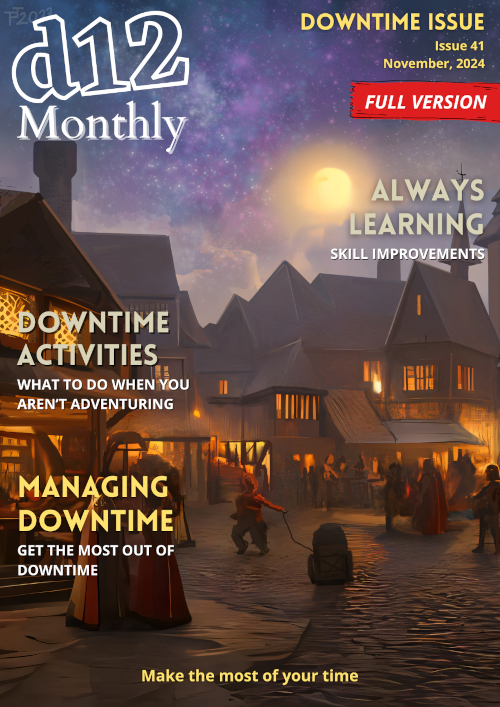
Some of my Zines
Change Creates New Adventure
A static world produces repetitive adventures.
A changing world produces evolving ones.
If the mayor dies, perhaps:
-
-
- A grieving heir hires the party
- A rival faction frames them
- Trade collapses and crime rises
- A neighbouring city-state sees weakness and moves troops
-
Think in ripples.
One event → three consequences → nine new pressures.
You don’t need to plan all of it. You just need to ask:
“Given what happened, what would logically change?”
Let logic drive transformation.
Change Makes the World Feel Real
In a living campaign:
-
-
- Cleared bandit camps don’t stay empty forever
- Slain dragons leave hoards that attract attention
- Burned farms create famine
- Famine creates migration
- Migration creates conflict
-
The world reacts.
When players see that reaction, they begin to treat the world seriously.
-
-
- They plan better
- They think politically
- They care
-
And that is when a campaign deepens.
Small Change Matters Too
Not every change needs to shake kingdoms.
Subtle shifts are powerful:
-
-
- A tavern owner grows friendlier after being helped
- A guard captain becomes suspicious after being embarrassed
- Prices rise after caravan raids
- A cleric loses faith after witnessing horror
-
These slow burns create texture.
Over time, they accumulate.
And suddenly, the players realise the town feels different – because it is different.
Practical Ways to Use Change at the Table
Here are simple tools you can use immediately:
1. Track Time
If a week passes in-game, ask: what evolved during that week?
2. Advance Factions
Every major faction should have goals. If the players do nothing, those goals still progress.
3. Update Locations
When players revisit somewhere, alter at least one visible detail.
4. Let Consequences Stand
Resist the urge to “reset” things for convenience.
5. Think in Vacuums
Whenever something is removed – a leader, a monster, a source of wealth – ask what fills the space.
The Campaign Is a River, Not a Museum
A museum preserves.
A river flows.
Your campaign should flow.
The characters are not walking through a preserved exhibit of prepared encounters. They are moving through a world that reshapes itself around their actions – and sometimes in spite of them.
Change is not something to control. It is something to harness.
When you let the world move, breathe, and evolve, your game stops feeling like a sequence of adventures and starts feeling like history in the making.
And that is when it becomes unforgettable.
While You’re Here…
Since 2021 I have been publishing d12 Monthly, a monthly zine, which has a ton of articles for any edition of Dungeons and Dragons.
Printed copies are available in my store. The PDF is available on DriveThruRPG and you can get both, plus support my work, via my Patreon.
I will also be releasing some more products in the near future.
Feel free to reach out to me on Twitter or my contact page any time.